
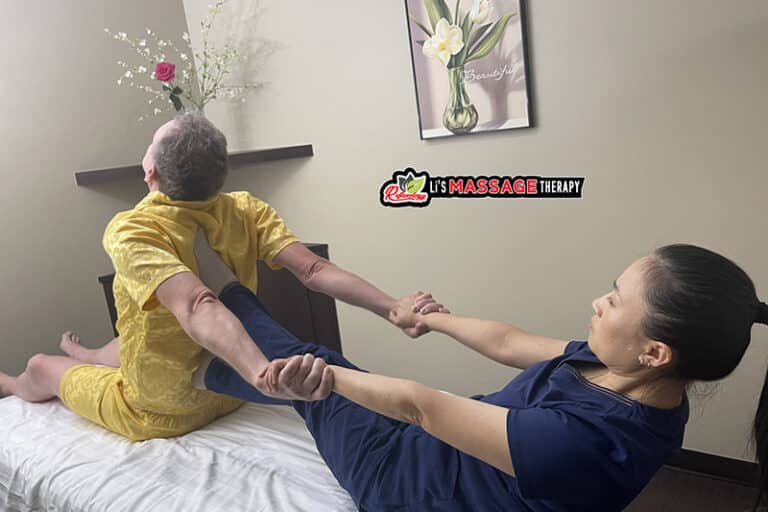
If you’ve ever caught yourself rubbing your neck after a long day at your desk, you’re not alone. Office workers across the country deal with nagging neck and shoulder pain, it’s practically an occupational hazard at this point. The culprit? Hours spent hunched over keyboards, squinting at monitors, and cradling phones between our ears and shoulders.
But here’s the good news: you don’t have to accept chronic discomfort as part of your 9-to-5 reality. Massage therapy offers a proven, effective way to address the muscle tension that builds up from desk work. At Li’s Massage Therapy and Reflexology, we’ve helped countless office workers in Centennial and Highlands Ranch, Colorado find relief from the aches and pains that come with modern work life. In this guide, we’ll walk you through why this pain develops, how massage targets it, and what you can do to feel better, both on and off the massage table.
Why Office Workers Experience Neck and Shoulder Pain
Let’s be honest, our bodies weren’t designed to sit in chairs for eight hours a day. When we do, certain muscle groups get overworked while others weaken from disuse. The neck and shoulders bear the brunt of this imbalance, supporting our heads (which weigh about 10-12 pounds, by the way) while we crane forward to read emails or type reports.
Over time, this creates a perfect storm for chronic discomfort. The trapezius muscles across your upper back tighten up. Your levator scapulae, those muscles that connect your neck to your shoulder blades, become strained. And the small muscles at the base of your skull? They’re working overtime just to keep your head upright.
The Role of Prolonged Sitting and Poor Posture
Poor posture is the silent killer of neck and shoulder health. When you slump forward, your head shifts ahead of your spine, and for every inch it moves forward, the effective weight on your neck muscles roughly doubles. This phenomenon, sometimes called “tech neck” or “forward head posture,” puts enormous strain on your cervical spine and surrounding soft tissues.
Prolonged sitting compounds the problem. Blood flow decreases, muscles receive less oxygen, and metabolic waste products build up in the tissue. The result? Stiffness, soreness, and those knots you can feel forming between your shoulder blades.
Stress plays a role too. When we’re under pressure at work, we unconsciously tense our shoulders, raising them toward our ears without even realizing it. By the end of a stressful week, those muscles are practically screaming for relief.
How Massage Therapy Targets Muscle Tension
So what actually happens during a massage that makes it so effective for desk-related pain? It’s more than just “rubbing out” the tension, though that’s certainly part of it.
When a skilled massage therapist works on tight muscles, several physiological changes occur. First, manual manipulation increases blood flow to the affected area, delivering fresh oxygen and nutrients while flushing out inflammatory compounds and metabolic waste. This alone can provide significant relief from that heavy, achy feeling in your shoulders.
Massage also helps break up adhesions, those “sticky” areas where muscle fibers have essentially gotten glued together from chronic tension or minor injuries. These adhesions restrict movement and contribute to that feeling of stiffness many office workers know all too well.
There’s a neurological component too. Massage activates your parasympathetic nervous system, the “rest and digest” mode that counteracts the stress response. This helps muscles relax at a fundamental level, not just temporarily but in a way that can retrain your body’s baseline tension.
At Li’s Massage Therapy and Reflexology, our licensed massage therapists understand the specific muscle groups affected by desk work. We communicate with clients throughout each session to find what works best for their individual needs, whether that’s focusing on stubborn knots in the upper trapezius or releasing tension along the spine.
Best Massage Techniques for Desk-Related Pain
Not all massage techniques are created equal when it comes to addressing office-related muscle tension. While a relaxing Swedish massage has its place, certain modalities are particularly effective for the specific issues desk workers face.
Deep Tissue Massage
Deep tissue massage is often the go-to choice for chronic muscle tension. Unlike lighter massage styles, deep tissue work targets the deeper layers of muscle and connective tissue where stubborn tension tends to hide.
This technique involves slow strokes, direct pressure, and friction movements applied across the muscle grain. It’s particularly effective for breaking up scar tissue and addressing those rock-hard knots that form in the upper back and shoulders. The pressure can be intense, some describe it as a “good hurt”, but the results speak for themselves.
At Li’s Massage Therapy and Reflexology, our deep tissue massage targets chronic muscle tension deep below the body’s surface. We adjust our approach based on your comfort level and feedback, ensuring you get therapeutic benefits without unnecessary discomfort.
Trigger Point Therapy
Trigger points are those specific spots in muscles that refer pain to other areas when pressed. You might have a trigger point in your shoulder that causes headaches, or one in your upper back that sends pain shooting down your arm. Sound familiar?
Trigger point therapy involves applying sustained pressure to these specific points until they release. It’s incredibly effective for the type of referred pain patterns common in office workers. Many clients are surprised to find that the source of their neck pain is actually a trigger point in their shoulder, or vice versa.
Our combination massage option, which includes work on the feet, shoulders, neck, and back, can incorporate trigger point therapy alongside other techniques for comprehensive relief.
Self-Massage Tips for the Workplace
We wish we could be there every time you feel a knot forming, but since that’s not practical, here are some self-massage techniques you can use right at your desk.
Tennis ball technique: Keep a tennis ball in your desk drawer. You can lean against it on a wall to work out knots in your upper back, or sit on it (gently) to release tension in your glutes and lower back, which definitely affects your upper body posture.
Neck release: Place your fingers at the base of your skull where those tight suboccipital muscles live. Apply gentle pressure and slowly nod your head yes and no. You’ll feel those muscles stretch and release.
Trapezius squeeze: Reach across your body with one hand and grab the muscle at the top of your opposite shoulder. Squeeze firmly, hold for a few seconds, then release. Repeat several times on each side.
Forearm roll: Don’t forget your arms. Rolling a foam roller or even a water bottle along your forearms can release tension from all that typing and mouse work.
These techniques work best as maintenance between professional massage sessions. They can provide temporary relief, but they can’t replace the skilled hands of a trained therapist who can address deeper issues and work areas you simply can’t reach yourself.
How Often Should Office Workers Get a Massage
This is one of the most common questions we hear, and honestly, the answer depends on several factors: the severity of your pain, your budget, and your overall wellness goals.
For office workers dealing with chronic neck and shoulder tension, we generally recommend starting with weekly or bi-weekly sessions until the acute issues are under control. Once you’ve established a baseline of relief, monthly maintenance sessions often work well to prevent tension from building back up.
Think of it like going to the gym. You wouldn’t expect one workout to keep you fit forever, right? Massage works similarly, regular sessions provide cumulative benefits that single appointments can’t match.
Some clients find that seasonal changes affect their needs. Winter months, when we tend to hunch against the cold and spend more time indoors, often require more frequent sessions. Summer might allow for a lighter schedule.
Listening to your body is key. If you notice tension building before your next scheduled appointment, that’s your signal to come in sooner. And if you’re going through a particularly stressful period at work, a big project deadline, for instance, proactive massage can help you get through it without your shoulders ending up around your ears.
At Li’s Massage Therapy and Reflexology, we work with clients to develop personalized schedules that fit their needs and lifestyles. Our goal is to help you maintain physical and psychological wellness, not just put out fires when pain becomes unbearable.
Complementary Habits for Long-Term Relief
Massage therapy is powerful, but it works best as part of a comprehensive approach to managing desk-related pain. Here are habits that can extend the benefits of your sessions and keep you feeling better between appointments.
Move regularly. Set a timer to remind yourself to stand up and move every 30-45 minutes. Even a quick walk to the water cooler or a few stretches by your desk can prevent muscle stiffness from setting in.
Optimize your workstation. Your monitor should be at eye level, your keyboard at a height that allows your elbows to rest at roughly 90 degrees, and your feet flat on the floor. Small adjustments here can make a huge difference.
Strengthen the opposing muscles. The muscles in your chest and the front of your shoulders tend to get tight from hunching forward, while your upper back muscles weaken. Simple exercises like rows, reverse flys, and chin tucks can help restore balance.
Stay hydrated. Muscles that are dehydrated are more prone to cramping and tension. Keep a water bottle at your desk and sip throughout the day.
Manage stress. Easier said than done, we know. But stress reduction techniques like deep breathing, meditation, or even a quick walk outside can prevent the unconscious shoulder-tensing that contributes to chronic pain.
Consider heat therapy. A heating pad on your shoulders during the workday or before bed can help relax tight muscles and improve circulation.
Conclusion
Neck and shoulder pain doesn’t have to be the price you pay for earning a living at a desk. With the right approach, combining professional massage therapy, self-care techniques, and healthy workplace habits, you can break the cycle of chronic tension and actually feel good in your body again.
We’ve seen the transformation firsthand at Li’s Massage Therapy and Reflexology. Clients who came to us barely able to turn their heads are now living pain-free, with the tools and knowledge to maintain their progress. Whether you need deep tissue work to tackle stubborn knots or a full body massage tailored to your specific concerns, our highly qualified massage therapists are here to help.
If you’re in the Centennial or Highlands Ranch area and ready to give your overworked neck and shoulders the relief they deserve, we’d love to see you. Call us today or book an appointment online, your body will thank you.
